
About the Book
Set in the countryside of western Ireland, In The Forest centers on unwitting victims for sacrifice: a radiant young woman, her young son and a trusting priest, all dispatched to the wilderness of a young man’s unbridled, deranged fantasies.Edna O’Brien’s riveting, frightening and brilliantly told novel reminds us that anything can happen when protection isn’t afforded to either perpetrator or victim…
My Thoughts (could contain spoiler if the synopsis wasn’t obvious enough)
The main plot of this story is about a boy who grows up completely out of control, bouncing from boys homes to lock-ups, acting crazy in front of everyone he meets. Most all of the townsfolk ignore or avoid his presence until he ends up on trial for murder. Much of the story is told from his point of view which can give the reader a glimpse into a mind that is quite obviously broken. The other part of this book concerns the mother and son who he will kidnap and murder. There is also a lot of other characters brought into this, with (in my opinion) a ton of meaningless happenings that really don’t add to the story or any character development.
You’ve probably gotten a hint that I wasn’t too impressed by this book, and you’d be right. I decided to read this because it has received many good reviews and it is listed on page 922 of Peter Boxall’s 1001 Books You Must Read Before You Die, but there were a few things that didn’t appease the book lover in me.
After reading In The Forest, I used my handy-dandy internet connected computer to research the history of the event the book was based on. In the 1990’s Brendan O’Donnell kidnapped and killed a woman, her child, and a local priest, after having been very well known as crazy in his town. The townsfolk, family, social services etc. did not attempt to help O’Donnell in any way during his adolescence or early adult life, even though it was painfully obvious that he needed help. Now In The Forest is identical aside from changing the names, and writing the story as a fictionalized account that includes possible interactions/thoughts that some of the characters may have had.
Okay, so there are many books to be found that create fictionalized stories of real events, but in this case I found it slightly annoying that it wasn’t more obvious (at least from my edition) that this was based on a true story. At the end of the book, the author has included a brief paragraph long Author’s Note that sums up the entire story with full names and dates. But that still wasn’t enough for me. I just have this completely irrational feeling that readers may end up giving credit where it isn’t due.
However, with that in mind, I will say that the author does indeed have a wonderful way with words. The writing found in this book was beautiful for such a horrible topic. Here is one passage that I found perfect as I’ve many colored or oddly shaped rocks that may seem a mystery to others but for me are a reminder of certain beaches and woods I’ve walked:
In the basket are the several stones that Eily collected on her journeys, stones sometimes chosen in the vertigo of love. She picks one up – round, squat, grey, inscrutable, its stony life locked within it, so that it tells nothing of its former whereabouts.
So there’s nothing negative I can say about the writing of In The Forest, it’s mainly the content, my own personal preferences in terms of fiction, non-fiction and the blurring of the two was offended. I enjoy books that draw upon true stories for inspiration, but with this particular book I felt there was not enough fictional input, or maybe not enough recognition given to the origin of the books plot. A truly talented writer can make a grocery list found in a trash can sound lyrical, but does that mean they should be applauded for improving on content they did not create? Where does the line between fiction and non-fiction fall?
Two local men interviewed by a reporter from The Scotsman said exactly what I am thinking after finishing this book:
"Most people want to forget about what happened," one man says, before correcting himself. "Not forget about it, just leave it alone."
"Why didn’t she write a well-researched book about it instead of making it a novel?"
Both quotes are from the article entitled “Making A Killing Out Of A Murder” by Tina Neylon (2002)
I’ve seen many comparisons between this book and Truman Capote’s famous novel In True Blood, but for me the main differences are the amount of consensual research Capote did for his book weighed against the fact that relatives and townsfolk pleaded with O’Brien to not write her book. I guess in the end it all comes down to the fact that regardless of how others may feel, a writer may write about anything they like, anyway they like. And only their conscience may tell them otherwise.
About The Author
In more than twenty books, Edna O'Brien has charted the emotional and psychic landscape of her native Ireland. Often criticized in her own country for her outspoken stance, she has forged a universal audience; the San Francisco Chronicle described her as 'a worthy heir to the great Irish forebears in Irish literature', while Le Figaro noted that 'the breathlessness of her language is comparable to Faulkner'. Awards and prizes include the Irish PEN Lifetime Achievement Award, Writers' Guild of Great Britain, Premier Cavour (Italian), American National Arts Gold Medal and Ulysses Medal 2006.
| Title: | In The Forest |
| Author: | Edna O’Brien |
| Book Genre: | Fiction |
| Book Type: | Trade paperback 273 pages |
| Publisher: | Phoenix |
| Publication Date: | March 2003 |
Let me know and I’ll add your link to the list :)
© 2008-2010 Joanne Mosher of The Book Zombie. All rights reserved.


 A couple of weeks ago,


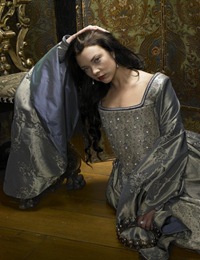 And now I’m going to try and get through my overflowing Google Reader and enjoy some more of The Tudors Season 2. The newest third season begins tonight! Cannot wait! But does it make me a bad person that I also cannot wait for Anne Boleyn to lose her head? God she’s driving me mad, I find her to be such a whiny bitch!






 Most of those As Seen On TV products are usually not so hot, but the wonderfulness of the ShamWow is really unbelievable! These things really work, and with 2 teenagers, 2 dogs, 1 senile kitty and a man who leaves dishes everywhere(!) I’m always dealing with spills. But look at what I came across at The Smoking Gun (I’m dealing with an addiction to this site atm)





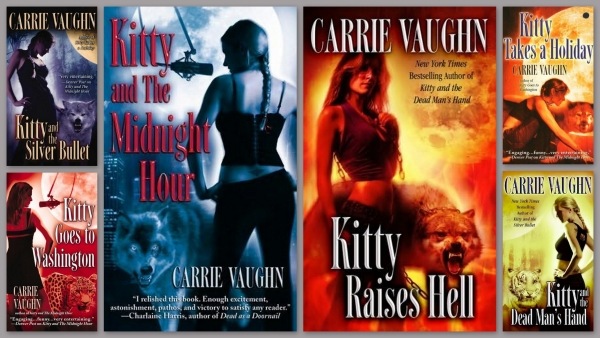
 If you spend much time in the book-blogosphere, you may have noticed that Carrie Vaughn and Kitty Norville have been making a lot of appearances around town. That’s because two brand new Kitty books hit the shelves recently. Ohhh you don’t know who Kitty is? Well, she’s this awesome character from a series of books – now genre-wise I would call this series Urban Fantasy, I’ve heard some refer to it as paranormal romance and others consider it strictly fantasy. But these books are really hard to classify since they contain so many different elements. Okay, back to Kitty – first of all, she’s got this cool job that allows her to stay up all night listening to rock’n’roll (dreamy job eh?) but for Kitty her job allows her to hide out who she really is. She’s a werewolf! A very feisty werewolf, who wants to build a better, safer community for all the supernaturals out there. Really, why should they all have to hide themselves away from the world? They live ordinary lives just like all the humans, well with a couple differences but those can be worked out. Oh and the supernatural community – it’s not just werewolves – there are all kinds of shapeshifters, skinwalkers, vampires, fey, jinn, psychics, magicians – well, you get the picture!


